
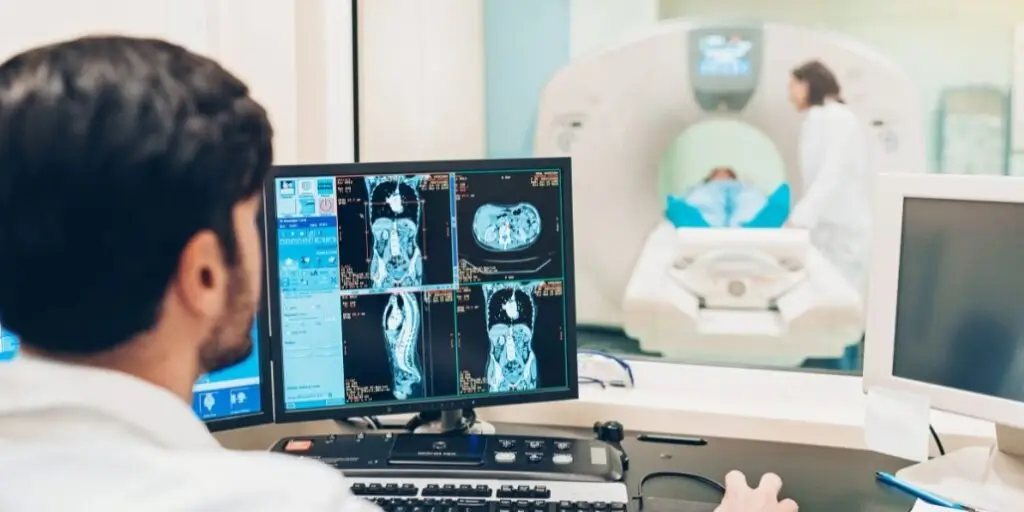
Priya was 34, a software project manager in Bangalore, and she had been managing mild lower back pain for about three weeks. It was annoying but manageable, the kind of ache that eased up after a short walk and got worse after a long day at her desk. On a colleague’s advice, she decided to get an MRI “just to be sure.”
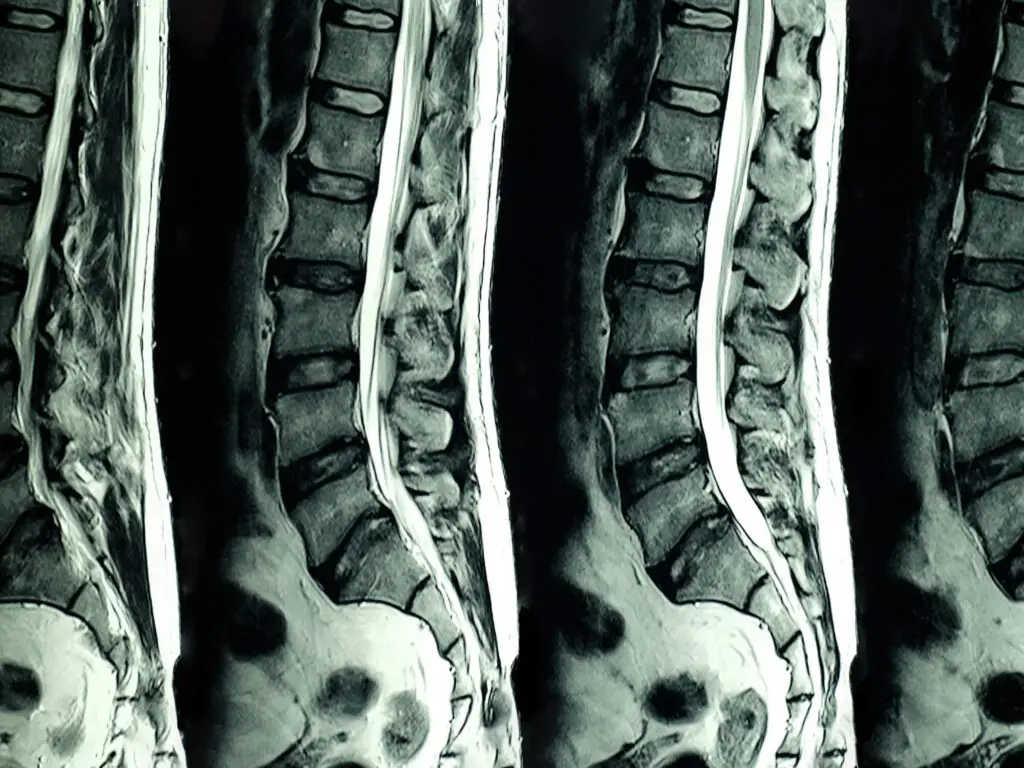
She came to my clinic two days later, scan in hand, visibly anxious. The radiology report mentioned a disc bulge at L4-L5 with mild nerve root compression. She had spent the previous 48 hours reading about spinal surgery on the internet.
She did not need surgery. She needed an explanation.
What the report is actually telling you
Your spine has 23 discs, one sitting between each pair of vertebrae. They act as cushions, absorbing the load from everything you do. Walking, sitting, bending, carrying groceries. Over time and with daily use, these discs gradually change. Some flatten slightly. Some push a little outward beyond their normal boundary. That outward push is what radiologists call a bulge.
The word sounds alarming. The reality is far more ordinary.
A landmark study published in the New England Journal of Medicine scanned 98 people who had absolutely no back pain and were going about their normal lives. The results were striking. 52% of them had a disc bulge at at least one spinal level. 38% had abnormalities at more than one disc. Only 36% had a completely normal scan at every level. New England Journal of Medicine
More than half the people in a pain-free room would show a disc bulge on MRI. By age 40, nearly 80% of people without any symptoms at all have disc degeneration visible on imaging. These are not diseased spines. These are normal spines that have been alive and working for four decades. Your Wellness Nerd
The scan shows anatomy, not pain
This is the single most important thing I want you to take from this post. A radiology report describes what the scanner can see. It does not tell you whether that finding is causing your symptoms, or whether it has been quietly sitting there for years before you ever felt a twinge.
Priya’s disc bulge may well have been present long before her back started hurting. The real question, which only a proper clinical examination can answer, is whether that finding and her pain are actually connected.
Radiologists are trained to report what is there. Spine surgeons are trained to decide what it means in the context of the person in front of them. These are two very different jobs, and an MRI report is the beginning of a conversation, not the end of one.
What usually happens without surgery?
Here is something that surprises most patients. Systematic reviews have estimated that roughly half to two-thirds of herniated lumbar discs show at least partial spontaneous shrinkage during conservative treatment, with some reporting complete resolution in a significant subset of patients. Your body has its own mechanism for dealing with disc material. Immune cells gradually break it down and reabsorb it. The disc that looked worrying on your scan three months ago may genuinely look different today. PubMed Central
Only about 10% of patients with disc problems end up needing surgery. The remaining 90% improve with physiotherapy, activity modification, pain management, and time. That is not a small number. That is the vast majority of people sitting in my waiting room. Barricaid
When surgery does become the right answer?
There are clear situations where we stop watching and act. If a disc is pressing on a nerve and causing weakness in your leg or foot, if you are losing control of your bladder or bowel, if months of genuine conservative treatment have not helped, or if the pain is so severe it is stopping you from functioning, these are the situations where surgery is not just an option but often the right one.
These indications are specific and clinical. They are not “my MRI report looks bad.”
What happened to Priya?
She left my clinic that day with a physiotherapy referral, some guidance on posture during her work hours, and instructions to come back if she developed leg pain, weakness, or anything that felt different from the dull ache she already had. Eight weeks later she messaged to say her pain had settled almost completely.

Her spine had not changed. Her understanding of it had.
If your MRI shows a disc bulge, do not read the report in isolation. Bring it to a spine specialist and have a proper assessment. The scan is one piece of information. What it means for you specifically is a separate conversation, and it is almost always a less frightening one than the report suggests.
Dr. Namith Rangaswamy is an AIIMS-trained spine surgeon based in Bangalore. drnamithspine.com
If you are experiencing these symptoms and would like a specialist opinion, book a consultation with Dr Namith Rangaswamy.