
What is Cauda Equina Syndrome?
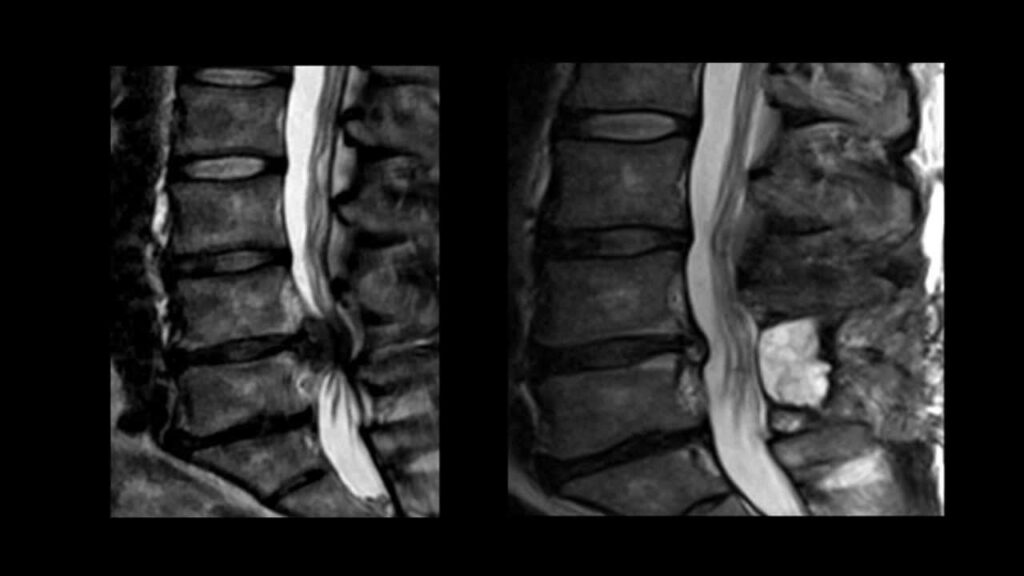
Cauda equina syndrome (CES) is a serious and time-sensitive spinal emergency. It occurs when the bundle of nerve roots at the base of the spinal cord, collectively called the cauda equina (Latin for “horse’s tail”), is severely compressed. These nerve roots control bladder, bowel, and sexual function, as well as sensation and movement in the legs.
When compression is severe and not treated promptly, the consequences can be permanent, including irreversible bladder and bowel dysfunction, saddle area numbness, and leg weakness. CES is one of the few true emergencies in spine surgery, and the window for meaningful neurological recovery is directly linked to the speed of surgical decompression.
Who Gets It and Why?
The most common cause is a large central lumbar disc herniation at L4-L5 or L5-S1. Other causes include:
- Severe lumbar spinal stenosis
- Spinal fractures with canal compromise
- Spinal tumours or epidural abscess
- Post-surgical haematoma (blood collection) compressing the cauda equina
What Does It Feel Like?
The warning signs of cauda equina syndrome must be recognised urgently:
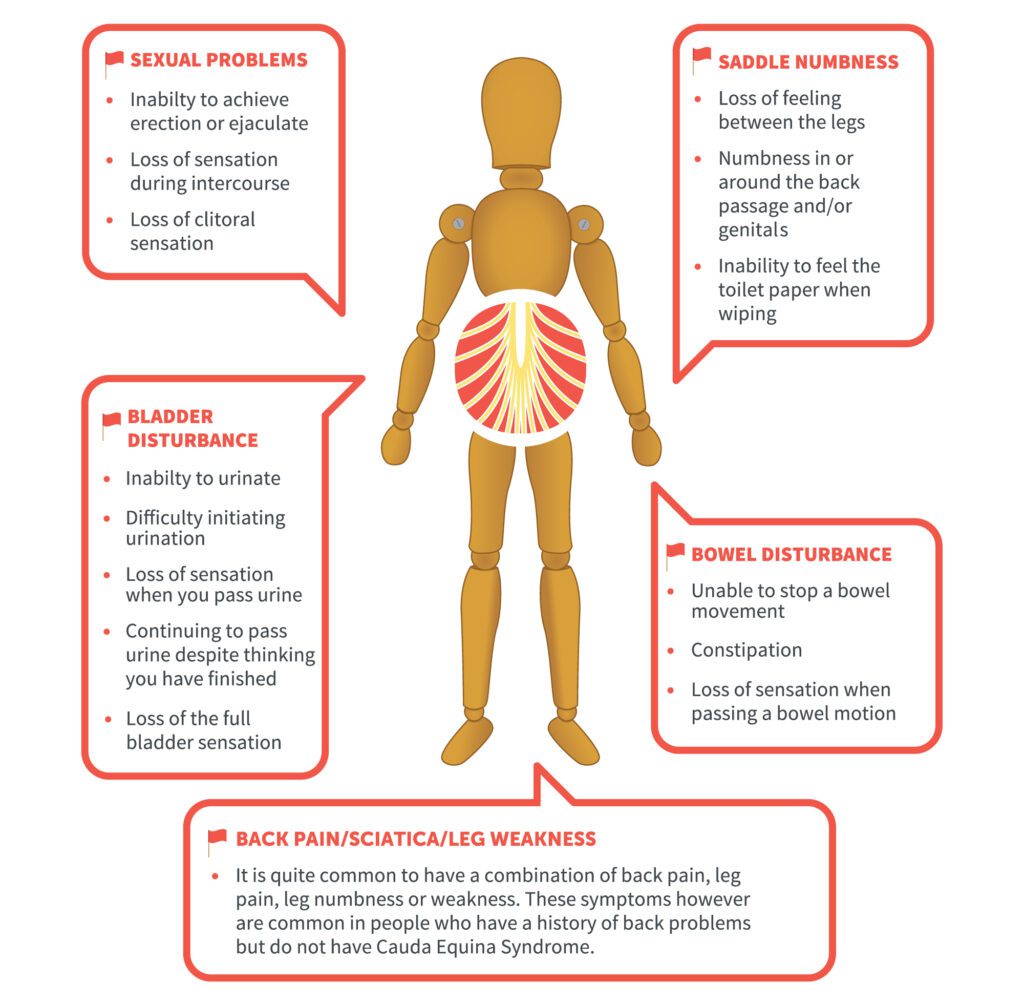
- Bladder dysfunction – inability to urinate (urinary retention) or loss of bladder control (incontinence). Urinary retention is the most consistent and important sign.
- Bowel dysfunction – loss of bowel control or inability to feel the need to defecate
- Saddle anaesthesia – numbness or altered sensation in the inner thighs, perineum, and buttocks (the area that would contact a saddle when sitting)
- Bilateral leg pain, weakness, or numbness – affecting both legs, not just one
- Sexual dysfunction – loss of sensation
If you or a patient has any combination of these symptoms, particularly new onset bladder or bowel dysfunction with back or leg pain, this requires emergency hospital assessment without delay.
How Is It Diagnosed?
- Emergency MRI of the lumbar spine is the definitive investigation and should be arranged immediately
- Clinical examination to assess perineal sensation, anal tone, and bladder function
- Post-void residual bladder scan to detect urinary retention
How Is It Treated?
Cauda equina syndrome is treated with emergency surgical decompression. The goal is to relieve the compression on the nerve roots as quickly as possible to maximise the chance of neurological recovery.
The standard procedure is lumbar decompression and discectomy, performed as an emergency operation. Timing is critical:
- Patients operated on within 24 to 48 hours of symptom onset have the best outcomes
- Bladder function in particular has the highest chance of recovery with early surgery
- Delay in surgery significantly worsens the prognosis for bladder, bowel, and sexual function
Post-operative rehabilitation, bladder management, and physiotherapy are important components of recovery. Some patients regain full function; others may have residual deficits depending on the degree and duration of compression before surgery.
If you have new back or leg pain combined with any difficulty urinating, numbness in the saddle area, or loss of bowel control, go to the nearest emergency department immediately. Do not wait for a routine appointment.
Self-Check at Home
Cauda equina syndrome is a medical emergency. There is no “home test” — the following are recognition criteria that should trigger immediate emergency hospital attendance:
The CES Emergency Checklist — Go to Emergency Immediately if You Have:
- New difficulty urinating or inability to pass urine (urinary retention)
- New loss of bladder control (urinary incontinence)
- New loss of bowel control
- Numbness or altered sensation in the inner thighs, perineum (area between the legs), or buttocks — the saddle area
- New weakness in both legs, not just one
- Back or leg pain that has suddenly and dramatically worsened
Do not wait to see if it improves. Do not book a routine appointment. Go directly to the nearest emergency department or call emergency services. CES treated within 24 to 48 hours has a far better outcome than CES treated after delay.
Motion-Preserving Considerations
Cauda equina syndrome requires emergency decompression. The surgical goal is to remove the compressive pathology (typically a large disc herniation) with the minimum necessary intervention. Fusion is not routinely performed for acute CES from disc herniation, preserving normal lumbar motion after recovery.
Understanding your symptoms is the first step. If something here sounds familiar, book a consultation with Dr. Namith Rangaswamy or call +91 91081 04114 to get a proper diagnosis.