
What is Ossified Ligamentum Flavum?
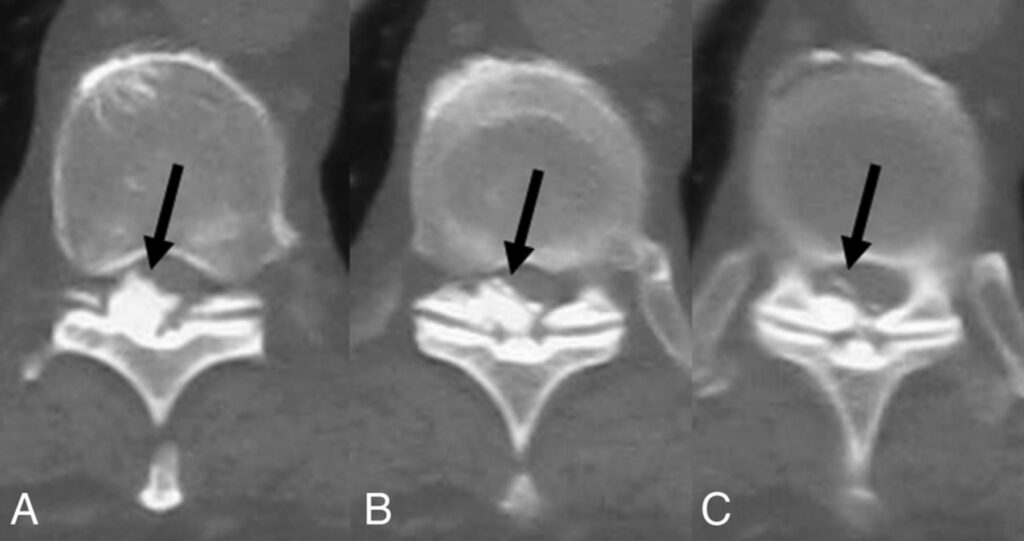
Ossified Ligamentum Flavum (OLF) is a condition in which the ligamentum flavum, a tough, elastic ligament running along the back of the spinal canal, undergoes progressive calcification and hardens into bone. As it enlarges, it compresses the spinal cord from behind, causing a form of thoracic myelopathy.
OLF is most commonly found in the lower thoracic spine (T9–T12) and is more prevalent in Asian populations, including Indians. It is one of the most important, and frequently missed, causes of progressive leg weakness and walking difficulty in middle-aged and older adults.
Because thoracic spine conditions are less commonly thought of compared to neck or lower back problems, OLF is often diagnosed late, after patients have already experienced significant neurological decline. Early recognition is critical.
Who Gets It and Why?
The exact mechanism is not completely understood, but contributing factors include:
- Mechanical stress on the thoracic spine, repetitive loading and micro-injury trigger abnormal bone formation within the ligament
- Genetic predisposition – particularly in East and South Asian populations
- Metabolic factors – associations with diabetes and other conditions affecting bone metabolism
- Age – most commonly presents in the fifth and sixth decades of life
What Does It Feel Like?
OLF produces a characteristic pattern of progressive thoracic myelopathy:
- Leg weakness – typically both legs, gradually worsening over months to years
- Gait disturbance – stiffness, heaviness, or spasticity when walking; difficulty climbing stairs
- Sensory changes – numbness or tingling in the legs, sometimes with a defined sensory level on the trunk
- Bladder and bowel dysfunction – urgency, difficulty initiating urination, or incontinence in more advanced cases
- Back pain – may or may not be present; many patients have surprisingly little pain despite significant cord compression
- Symptoms may worsen suddenly after minor falls or injuries
The gradual onset means patients often adapt to declining function over time, delaying presentation. Any progressive leg weakness or walking difficulty, even without significant back pain, warrants thoracic spine imaging.
How Is It Diagnosed?
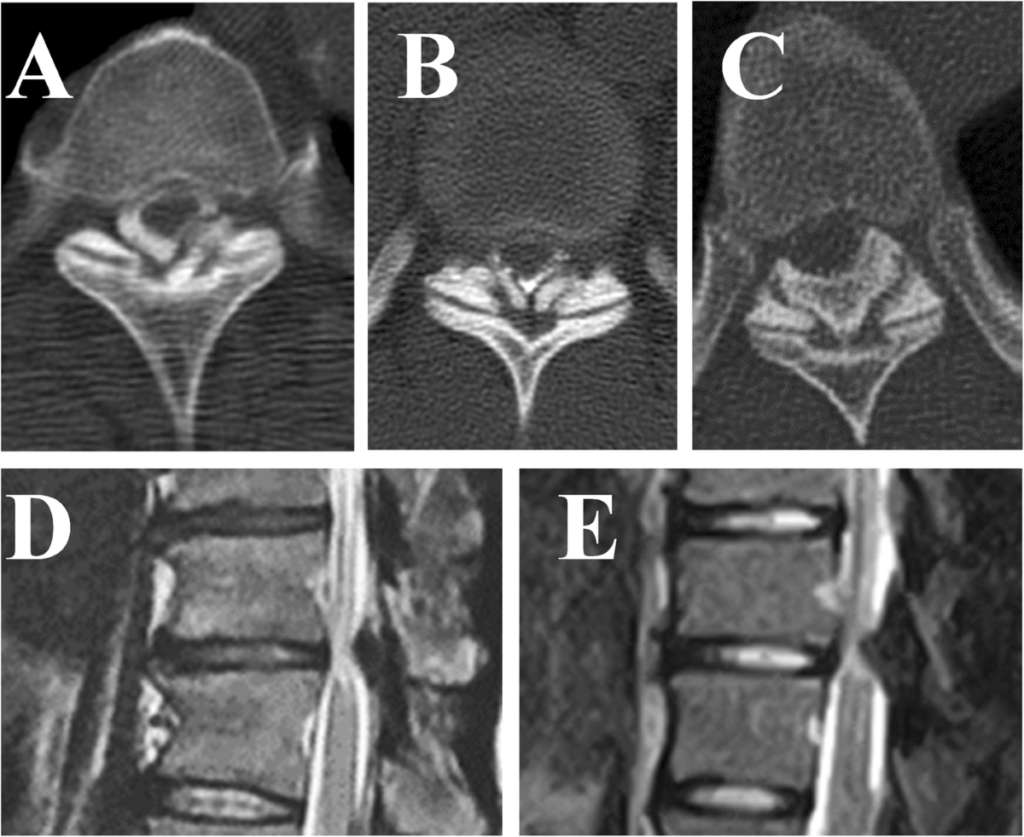
- MRI of the thoracic spine is the primary investigation, it shows the extent of cord compression and any signal change within the cord indicating established injury
- CT scan is essential for surgical planning, it precisely maps the extent, thickness, and segmental distribution of ossification
- Neurophysiological studies (somatosensory and motor evoked potentials) help objectively assess cord function and guide surgical decision-making
How Is It Treated?
OLF does not resolve with non-surgical treatment. Once the spinal cord is being compressed and symptoms are present, surgical decompression is the treatment of choice.
The standard procedure is posterior thoracic laminectomy, removal of the lamina and the ossified ligament to decompress the spinal cord from behind. In selected cases where spinal instability is a concern, stabilisation with instrumented fusion is performed at the same time.
Surgery for OLF is technically demanding because of the close relationship between the ossified ligament and the dura (the lining of the spinal cord), which can become adherent or even calcified itself in some cases. Careful surgical technique and intraoperative neurophysiological monitoring are essential.
Outcomes following timely surgical decompression are good, the majority of patients experience stabilisation of neurological function and meaningful recovery, particularly when surgery is performed before irreversible cord damage has occurred.
Progressive leg weakness or unsteady walking should never be assumed to be simply ‘age-related’. Thoracic spinal cord compression from OLF is treatable, but outcomes depend critically on early diagnosis and timely surgery.
Self-Check at Home
The Walking Distance Test: Walk at your normal pace on a flat surface and note how far you can walk before your legs feel heavy, weak, or uncomfortable. If your walking distance has progressively reduced over months — particularly if leg symptoms are the main limiting factor rather than breathlessness or joint pain — thoracic spinal cord compression should be considered.
The Stair Climbing Test: Climb a single flight of stairs and observe:
- Do your legs feel unusually stiff or heavy during the climb?
- Do you need to hold the railing for balance more than you used to?
- Is there a disproportionate effort required compared to your general fitness level?
Progressive difficulty with stairs from leg stiffness (not breathlessness or knee pain) is a characteristic early symptom of thoracic myelopathy from OLF.
The Sensory Level Check: Using a light touch (fingertip or soft cloth), run your hand upward from your foot along your leg and trunk. Note if there is a point on the trunk where sensation changes or feels different. A sensory level (a band around the trunk where sensation is altered) suggests thoracic spinal cord involvement and warrants urgent MRI.
The Bladder Function Check:
- Has there been any new urgency to urinate — a sudden compelling need to reach the bathroom immediately?
- Any hesitancy or difficulty initiating urination?
- Any episodes of incontinence?
New bladder symptoms alongside leg symptoms in a middle-aged or older adult should always prompt thoracic spine imaging.
Unsure about your symptoms? Our free Spine Self Check takes less than two minutes and gives you a clearer picture before your consultation.
Motion-Preserving Considerations
OLF surgery involves posterior decompression (laminectomy) at the affected levels. Where stability is maintained, fusion is avoided to preserve thoracic mobility. The principle of decompression without fusion wherever stability allows is consistently applied, limiting surgical intervention to what is genuinely necessary.
Understanding your symptoms is the first step. If something here sounds familiar, book a consultation with Dr. Namith Rangaswamy or call +91 91081 04114 to get a proper diagnosis.