
What is Cervical Radiculopathy?
Cervical radiculopathy occurs when a nerve root in the neck is compressed or irritated as it exits the spinal canal. Each nerve root supplies a specific region of the arm, so depending on which level is affected, patients experience pain, numbness, tingling, or weakness in a characteristic distribution down the arm or into the hand.
It is commonly referred to as a “pinched nerve in the neck” and is one of the most frequently encountered conditions in a spine clinic.

Who Gets It and Why?
The two most common causes are:
- Disc herniation – a bulging or ruptured cervical disc pressing directly on a nerve root. More common in younger and middle-aged adults.
- Cervical spondylosis – bony spurs and disc space narrowing gradually compressing the nerve root over time. More common with advancing age.
Less common causes include spinal instability, tumours, or cysts in the cervical spine.
What Does It Feel Like?
The hallmark symptom is pain that radiates from the neck into the shoulder, arm, forearm, or hand, typically following a specific pathway depending on the nerve affected. Associated symptoms include:
- Sharp, burning, or electric-shock-like arm pain
- Tingling or pins-and-needles in specific fingers
- Numbness in the arm or hand
- Weakness in specific arm or hand muscles
- Symptoms often worsened by looking up, tilting the head, or turning to the affected side
- Relief sometimes felt by resting the arm on top of the head (a characteristic sign)
How Is It Diagnosed?
Diagnosis is primarily clinical, supported by imaging:
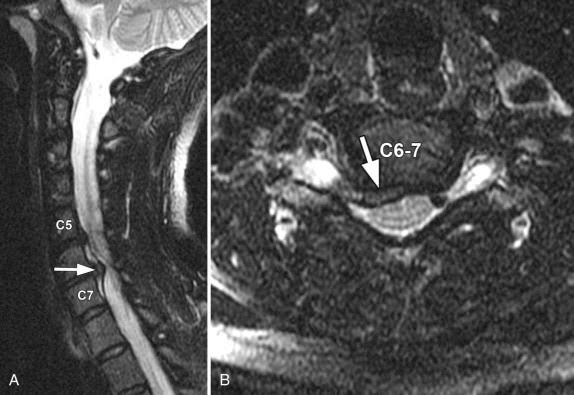
- MRI of the cervical spine is the investigation of choice, it identifies disc herniation or bony compression at the relevant level
- CT scan provides additional detail on bony anatomy
- Nerve conduction studies and EMG help confirm nerve involvement and localise the level when imaging and clinical findings are not fully concordant
How Is It Treated?
A significant proportion of cervical radiculopathy cases, particularly those caused by disc herniation, improve with non-surgical treatment:
- Physiotherapy with specific cervical nerve mobilisation techniques
- Anti-inflammatory medications and nerve pain agents (such as pregabalin or gabapentin)
- Cervical epidural or selective nerve root injections, highly effective for targeted pain relief and to allow rehabilitation
- Activity modification during the acute phase
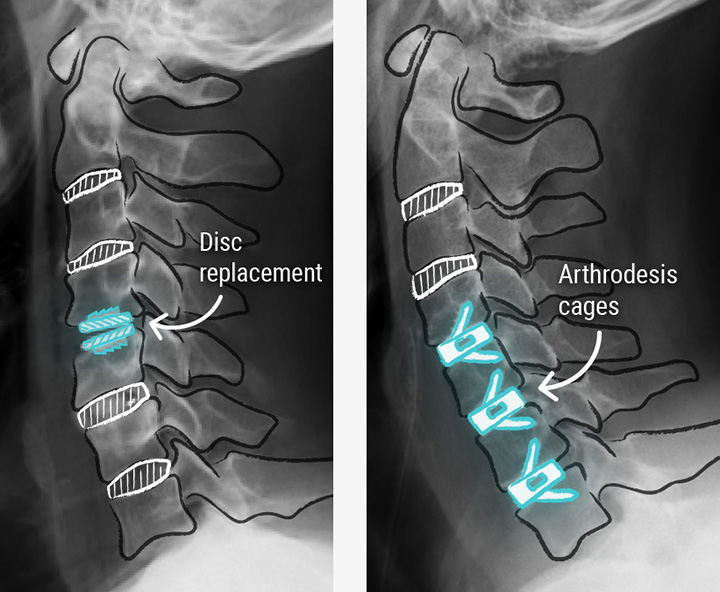
Surgery is recommended when neurological deficits (weakness, significant numbness) are progressive, when pain is severe and unresponsive to conservative treatment, or when imaging shows significant cord or nerve compression. Surgical options include anterior cervical discectomy and fusion (ACDF) and cervical disc replacement, both of which have excellent outcomes for appropriately selected patients.
Most patients with cervical radiculopathy recover well. A structured, specialist-guided approach avoids unnecessary intervention while ensuring timely surgery when it is genuinely needed.
Self-Check at Home
The Spurling’s Test (Home Version): Sit upright on a chair. Tilt your head toward the side of your arm pain and very gently apply light downward pressure on the top of your head. If this reproduces the shooting pain, tingling, or numbness down your arm, it suggests the nerve root on that side is being compressed. Perform this gently and stop immediately if you feel significant pain.
The Arm Relief Test (Shoulder Abduction Sign): Slowly raise the arm on your symptomatic side up and over your head, resting your hand on top of your head. If this position relieves your arm pain or tingling, it is a positive shoulder abduction sign — a characteristic feature of cervical radiculopathy. The movement reduces tension on the compressed nerve root, providing temporary relief.
Dermatome Self-Check: Different nerve roots supply sensation to specific parts of the arm and hand. Use a light touch (fingertip) to compare sensation on both sides:
- Numbness over the outer upper arm suggests C5 nerve involvement
- Numbness in the thumb and index finger suggests C6
- Numbness in the middle finger suggests C7
- Numbness in the ring and little finger suggests C8
Identifying which fingers or areas feel different compared to the other hand helps localise the affected nerve level before your appointment.
Unsure about your symptoms? Our free Spine Self Check takes less than two minutes and gives you a clearer picture before your consultation.
Motion-Preserving Surgical Options
Cervical Disc Replacement: Cervical disc replacement is the motion-preserving surgical standard for single or two-level cervical radiculopathy from disc herniation in appropriate candidates. It removes the herniated disc material compressing the nerve root and replaces it with an artificial disc that continues to move. Multiple high-quality studies demonstrate that disc replacement achieves equivalent or superior outcomes to fusion for radiculopathy, with the added long-term advantage of preserving adjacent segment health. This is the preferred surgical option for eligible patients at this practice
Understanding your symptoms is the first step. If something here sounds familiar, book a consultation with Dr. Namith Rangaswamy or call +91 91081 04114 to get a proper diagnosis.