
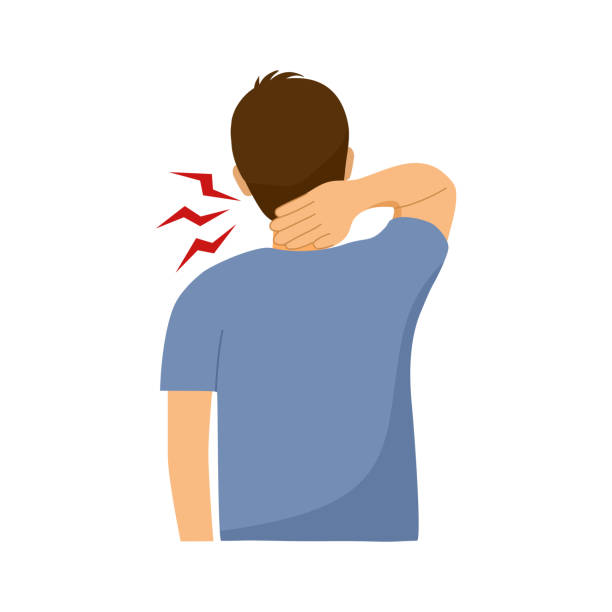
What is Neck Pain?
Neck pain is one of the most common reasons people visit a spine specialist. While occasional stiffness after a long day at a desk is familiar to most, persistent or severe neck pain, especially when it travels into the arms or causes weakness, often signals an underlying spinal condition that deserves proper evaluation.
The neck, or cervical spine, is made up of seven vertebrae (C1–C7) that support the weight of the head, protect the spinal cord, and allow a wide range of movement. Because of this combination of mobility and load-bearing, it is particularly vulnerable to both wear-and-tear and injury.
Who Gets It and Why?
Neck pain affects people of all ages, but is increasingly common in younger adults due to prolonged screen use and poor posture. Common causes include:
- Muscle strain from poor posture or prolonged sitting
- Cervical disc degeneration (age-related wear of the discs between vertebrae)
- Cervical spondylosis (arthritic changes in the cervical spine)
- Disc prolapse or herniation pressing on nerves
- Trauma such as whiplash injuries
- Rarely, infection or tumour involving the cervical spine
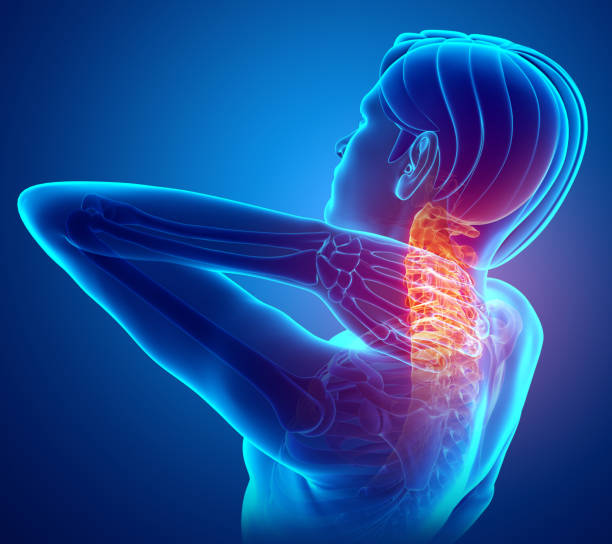
What Does It Feel Like?
Symptoms vary depending on the underlying cause but commonly include:
- Aching or stiffness in the neck, worse in the morning or after prolonged sitting
- Pain that radiates into the shoulder, upper back, or down the arm
- Headaches originating from the base of the skull
- Tingling or numbness in the hands or fingers
- In more serious cases, weakness in the arms or difficulty with fine hand movements
Pain that travels down the arm, causes weakness, or is associated with unsteady walking should be evaluated promptly, these may indicate nerve or spinal cord involvement.
How Is It Diagnosed?
A thorough clinical examination is the starting point. Your specialist will assess your posture, range of movement, reflexes, and neurological function. Investigations commonly include:
- X-rays to assess alignment and bony changes
- MRI scan — the most informative study, showing disc health, nerve compression, and spinal cord status
- CT scan for detailed bony anatomy when needed
- Nerve conduction studies if nerve involvement needs further characterisation

How Is It Treated?
Most neck pain responds well to non-surgical treatment, which remains the first line of management in the majority of cases:
- Physiotherapy and posture correction – targeted exercises to strengthen cervical muscles and improve alignment
- Pain management – anti-inflammatory medications, nerve pain medications as appropriate
- Activity modification – ergonomic advice, reduction of aggravating postures
- Injection therapy – selective nerve root or facet joint injections for specific cases
Surgery is considered only when there is evidence of nerve compression causing progressive weakness, spinal cord involvement, or when non-surgical treatment has failed after an adequate trial. When surgery is required, minimally invasive techniques are used wherever appropriate to reduce recovery time and tissue disruption.
If your neck pain is persistent, worsening, or associated with arm symptoms, an early specialist assessment can prevent avoidable deterioration.
Self-Check at Home
These simple checks can help you assess whether your neck pain needs specialist attention:
The Posture Check: Stand naturally in front of a mirror, viewed from the side. Your ear should sit directly above your shoulder. If your head is significantly forward of your shoulder (forward head posture), this places abnormal load on the cervical spine and is a common driver of chronic neck pain. Every centimetre your head moves forward of neutral adds approximately 4 to 5 kg of effective load on the cervical spine.
The Range of Motion Check: Sitting upright in a chair, gently perform the following movements and note any pain, stiffness, or restriction:
- Tilt your chin to your chest (flexion) — you should be able to bring your chin close to your chest
- Tilt your head back gently (extension)
- Turn your head to the left and right (rotation) — you should be able to turn approximately 80 degrees each side
- Tilt your ear toward each shoulder (lateral flexion)
Significant restriction in any direction, or pain radiating into the arm during any of these movements, warrants specialist assessment.
The Arm Symptom Check (Spurling’s Test — Modified Home Version): Sit upright. Gently tilt your head toward the side of your arm pain and apply very light downward pressure on top of your head with your hand. If this reproduces or worsens the arm pain or tingling, it suggests nerve root compression in the cervical spine. Do this gently — do not force the movement.
When to seek urgent care:
- Arm weakness that is new or worsening
- Numbness or clumsiness in both hands
- Any difficulty with walking or balance alongside neck pain
- Neck pain following any trauma, even seemingly minor
Motion-Preserving Surgical Options
The majority of neck pain does not require surgery. When surgery is needed, motion preservation is always the priority:
Cervical Disc Replacement (Artificial Disc): For patients with neck pain from a degenerate disc causing nerve or cord compression, cervical disc replacement replaces the damaged disc with an artificial implant that maintains movement at that level. Unlike fusion, which permanently locks two vertebrae together and transfers increased stress to adjacent levels, disc replacement allows continued natural movement. It is particularly well suited to younger and more active patients. Globally approved implants such as Mobi-C, Baguera-C, Prodisc Nova, Secure-C or Simplify are used.
Why Motion Preservation Matters in the Neck: The cervical spine performs thousands of small movements every day. Fusing even a single level permanently alters the mechanics of the entire neck. Over time, the levels above and below a fusion are exposed to higher stress, accelerating their degeneration — a phenomenon called adjacent segment disease. Disc replacement eliminates this risk by maintaining normal movement at the treated level.
At this practice, cervical disc replacement is offered as the preferred option for appropriate candidates, with fusion reserved for cases where disc replacement is not suitable.
Understanding your symptoms is the first step. If something here sounds familiar, book a consultation with Dr. Namith Rangaswamy or call +91 91081 04114 to get a proper diagnosis.