A structured overview of common spine conditions, symptoms, and treatment approaches to help patients better understand their condition and available care options. Click on the Links below to know more about your spine.
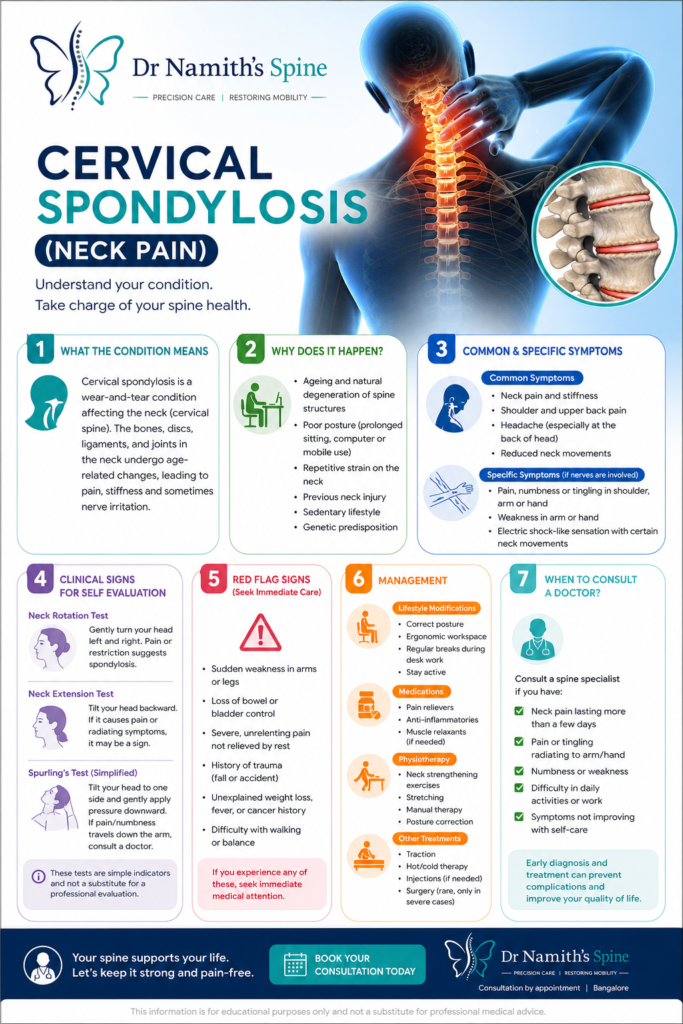
Neck Pain and Cervical Spondylosis
Neck pain is commonly related to age-related changes in the cervical spine, including disc degeneration and facet joint involvement. Symptoms may include stiffness, local pain, or radiation to the shoulder or arm depending on nerve involvement.
Cervical Myelopathy
Neck pain is commonly related to age-related changes in the cervical spine, including disc degeneration and facet joint involvement. Symptoms may include stiffness, local pain, or radiation to the shoulder or arm depending on nerve involvement.
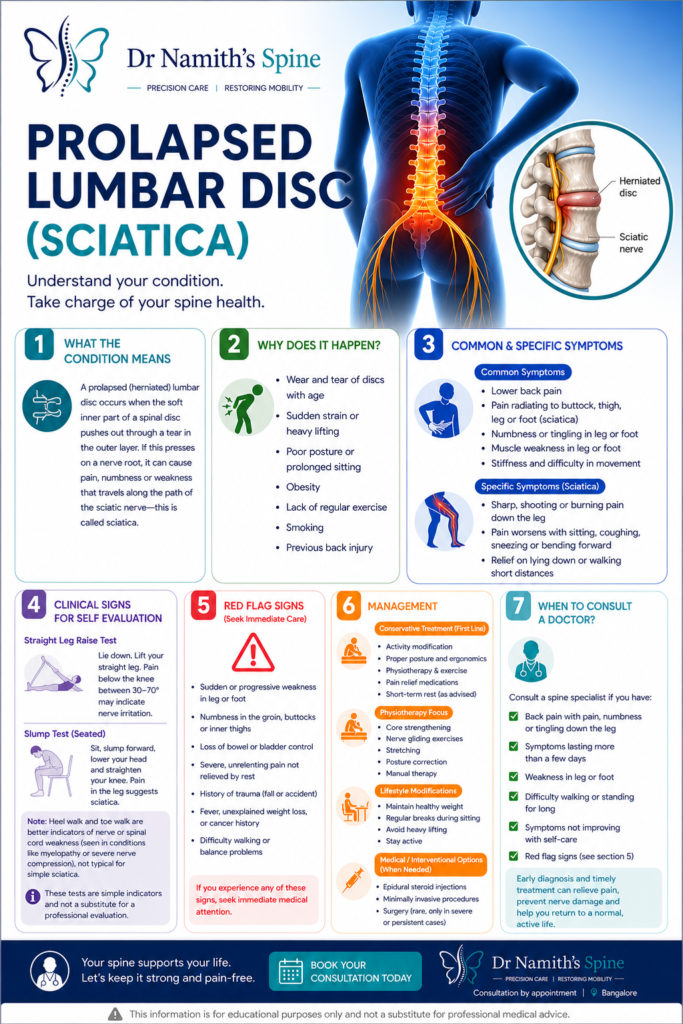
Slip disc and Sciatica
A slip disc occurs when part of the intervertebral disc protrudes and irritates adjacent nerve roots. This may lead to radiating leg pain (sciatica), often accompanied by numbness or weakness. Management depends on symptom severity and the degree of nerve involvement.
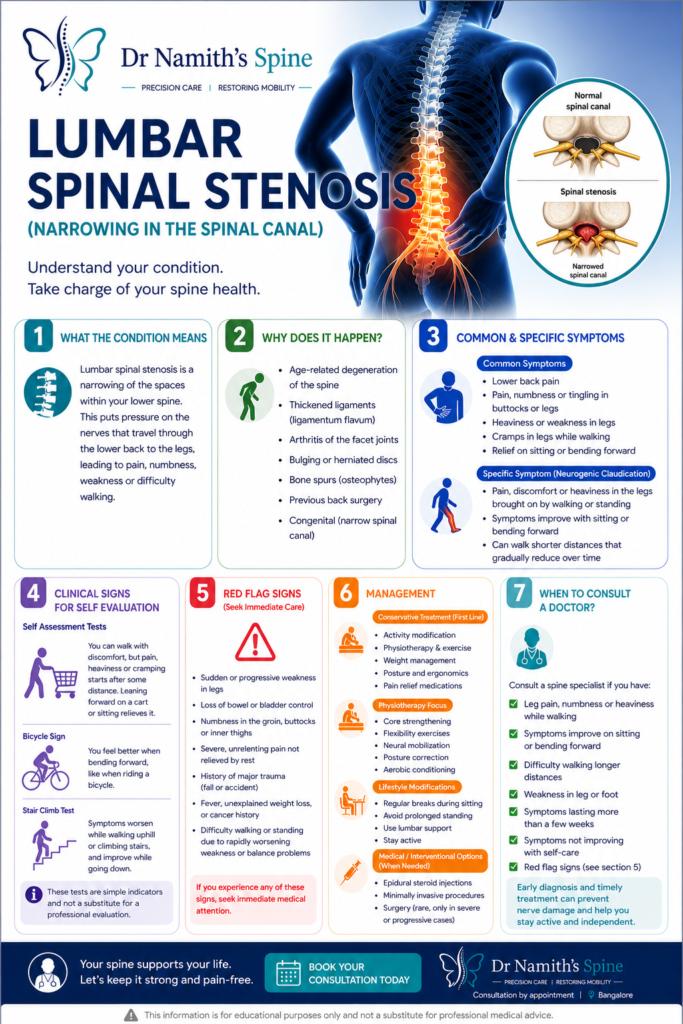
Lumbar Spinal Stenosis
Lumbar spinal stenosis refers to narrowing of the spinal canal that can compress nerve roots, often seen with age-related changes. It typically presents with leg pain, heaviness, or reduced walking tolerance that improves with rest or bending forward. Management is guided by symptom severity and functional limitation.
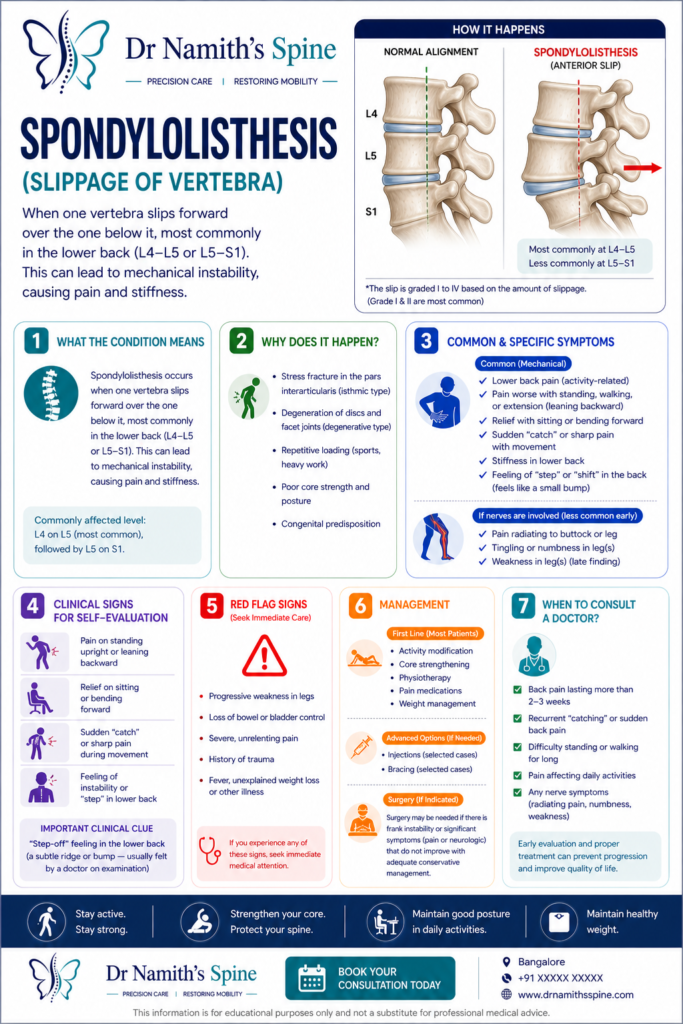
Spondylolisthesis (Slippage of vertebra)
Spondylolisthesis refers to forward slippage of one vertebra over another, often due to degenerative changes or a defect in the supporting structures. It may present with back pain, instability, or nerve-related symptoms depending on the degree of slippage and associated compression. Management is guided by symptoms and functional impact.
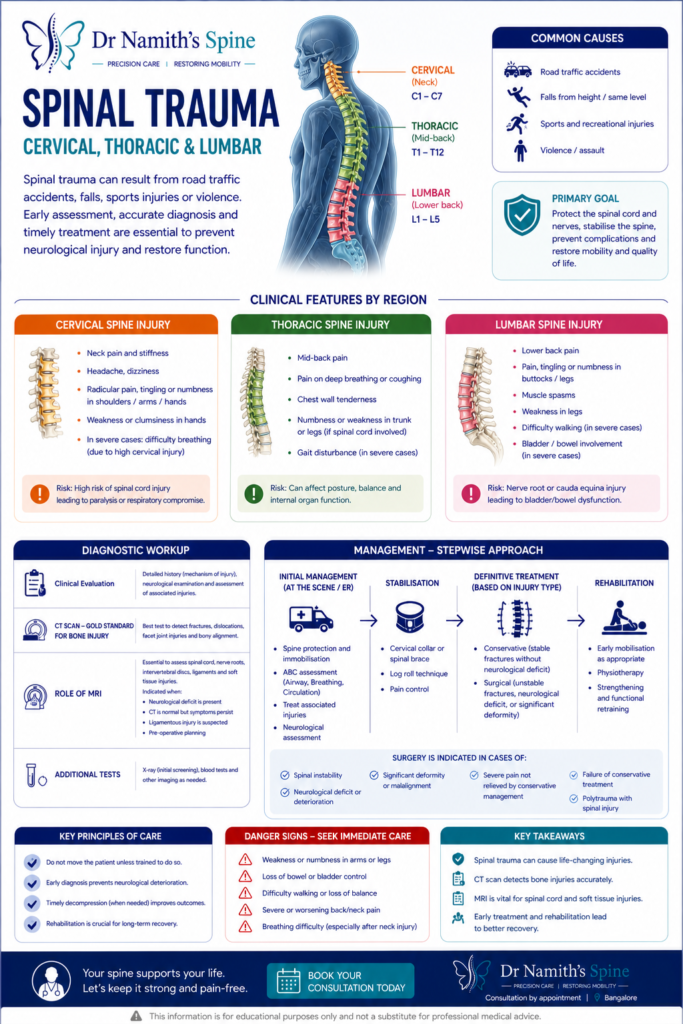
Spinal Trauma (fracture of the vertebra)
Spinal fractures result from high- or low-energy trauma and may compromise the stability of the spine and, in some cases, the spinal cord or nerve roots. Treatment is guided by fracture stability and neurological status, with the aim of restoring alignment and enabling safe recovery.
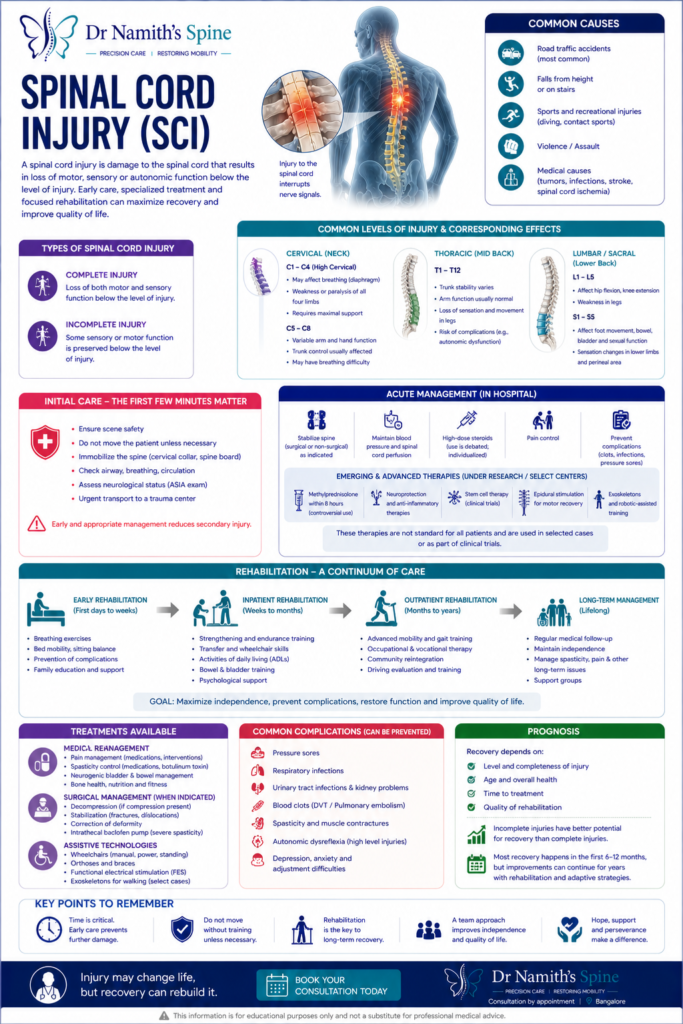
Spinal Cord Injury
Spinal cord injury results from damage to the spinal cord, most often due to trauma, and may lead to loss of movement, sensation, or both below the level of injury. The severity can vary from partial deficits to complete paralysis. Management focuses on early stabilisation, neurological protection, and long-term rehabilitation to maximise functional independence.
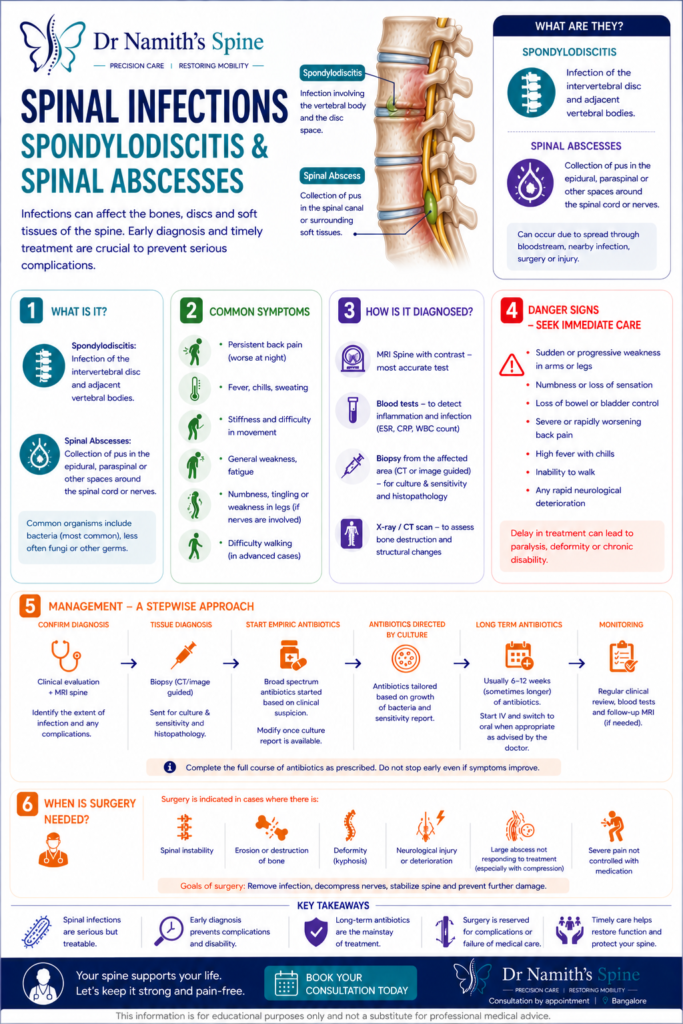
Spinal Infections
Spinal infections involve the vertebrae or intervertebral discs, most commonly due to bacterial spread through the bloodstream. They may present with persistent back pain, fever, or, in advanced cases, neurological symptoms. Early diagnosis and appropriate treatment are essential to prevent progression and complications.
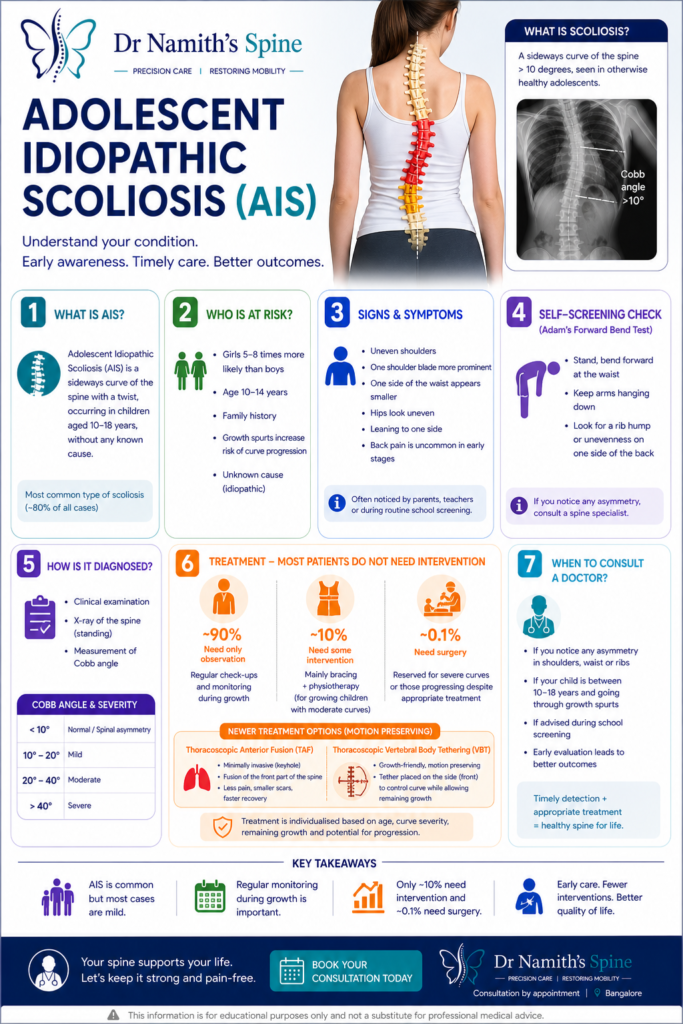
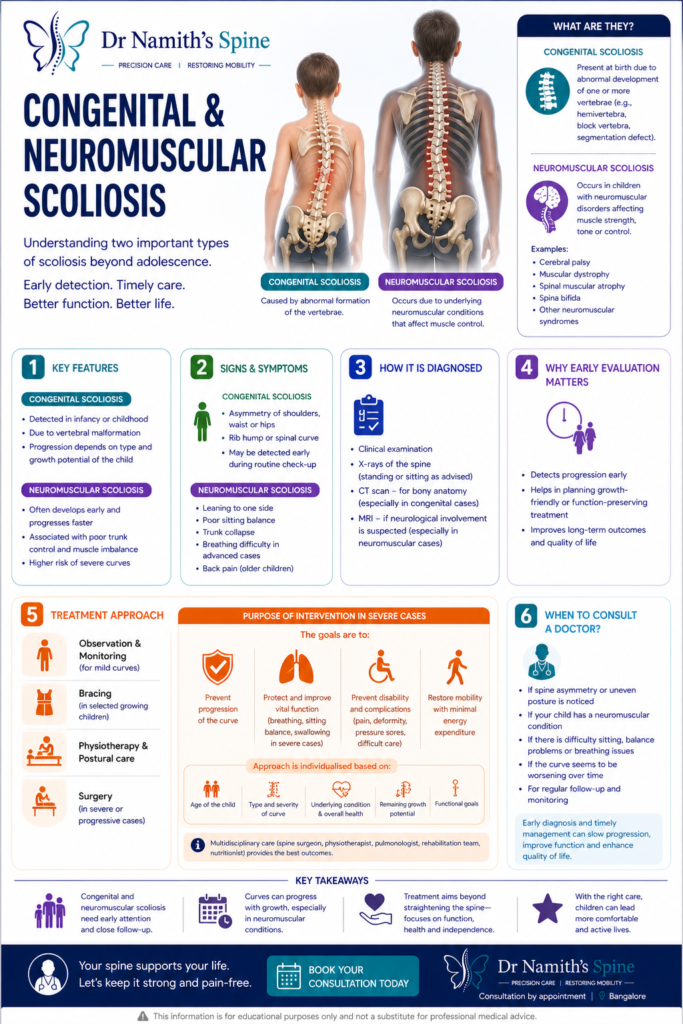
Scoliosis and Paediatric Deformities
Scoliosis and paediatric spinal deformities involve abnormal curvature or alignment of the spine during growth. They may be idiopathic, congenital, or associated with neuromuscular conditions. Management is guided by the degree of deformity, progression risk, and growth potential, with the aim of maintaining alignment and long-term function.
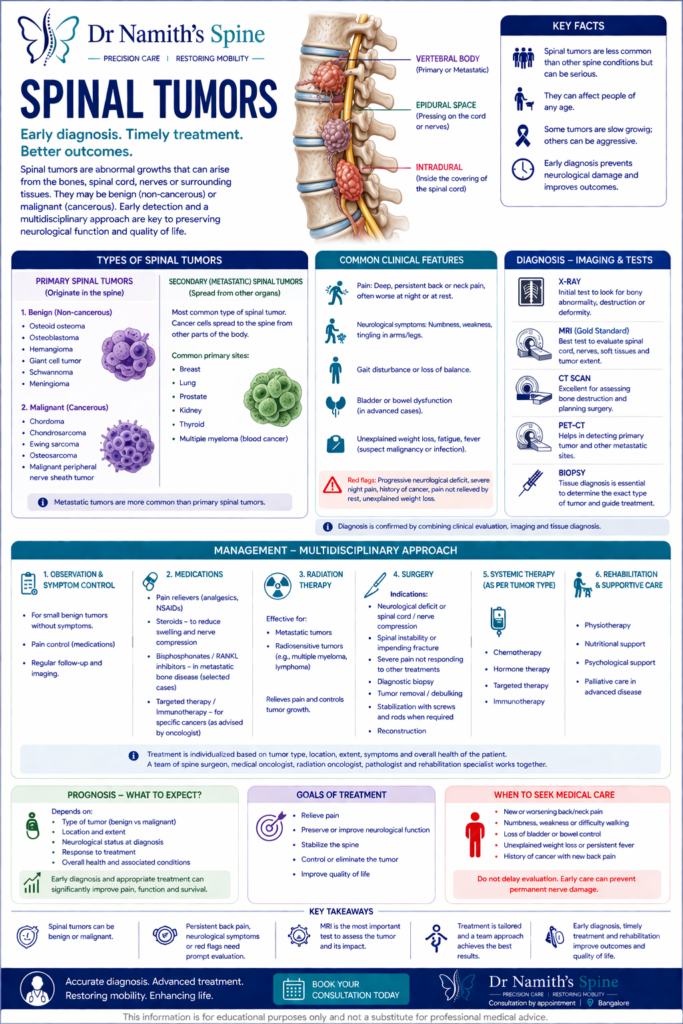
Spinal Tumors
Spinal tumors can develop within the bones of the spine or involve the spinal cord and surrounding tissues. They may cause persistent back pain, weakness, or changes in sensation. Treatment depends on the type of tumor and its effect on the nerves, with the goal of relieving symptoms and maintaining function
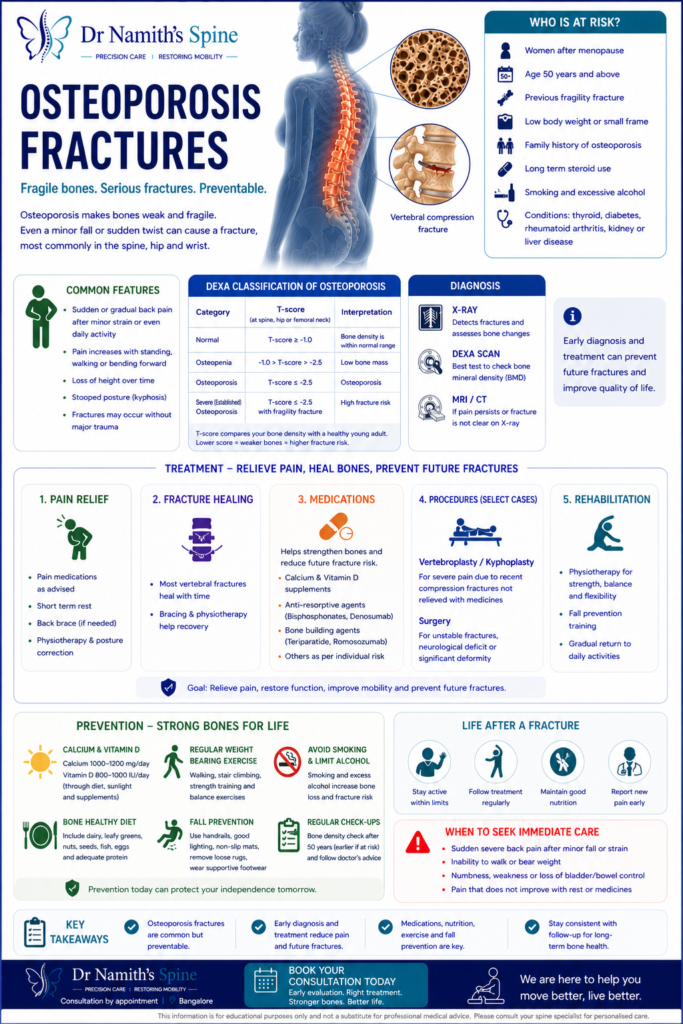
Osteoporosis of Spine (weak bones in old age)
Osteoporosis is a condition in which the bones become weak and fragile, and is more common in older adults, especially women after menopause. This makes the spine more prone to fractures even after minor falls or routine activities. These fractures can cause sudden back pain, loss of height, or a stooped posture. Treatment focuses on pain relief, strengthening the bones, and preventing further fractures.
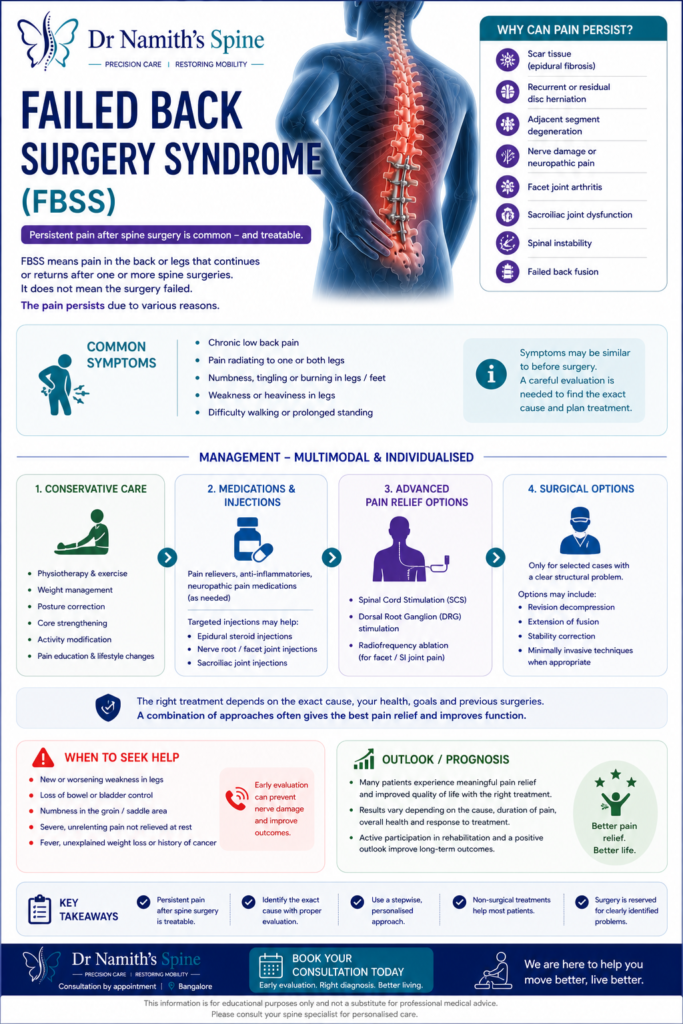
Failed Back Surgery Syndrome
Failed back surgery syndrome refers to persistent or recurring pain even after spine surgery. This may be due to factors such as incomplete relief of the original problem, scar tissue formation, or new issues developing over time. Management focuses on identifying the cause of ongoing symptoms and using a combination of treatments to improve pain and function.