
What is OPLL?
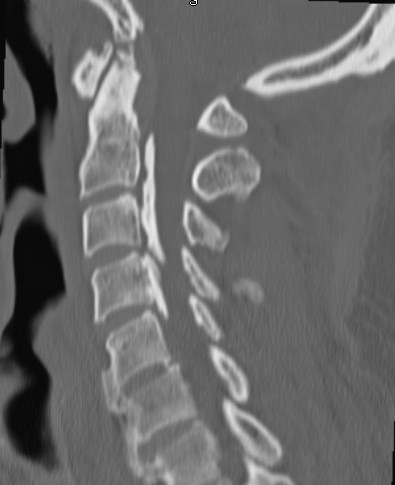
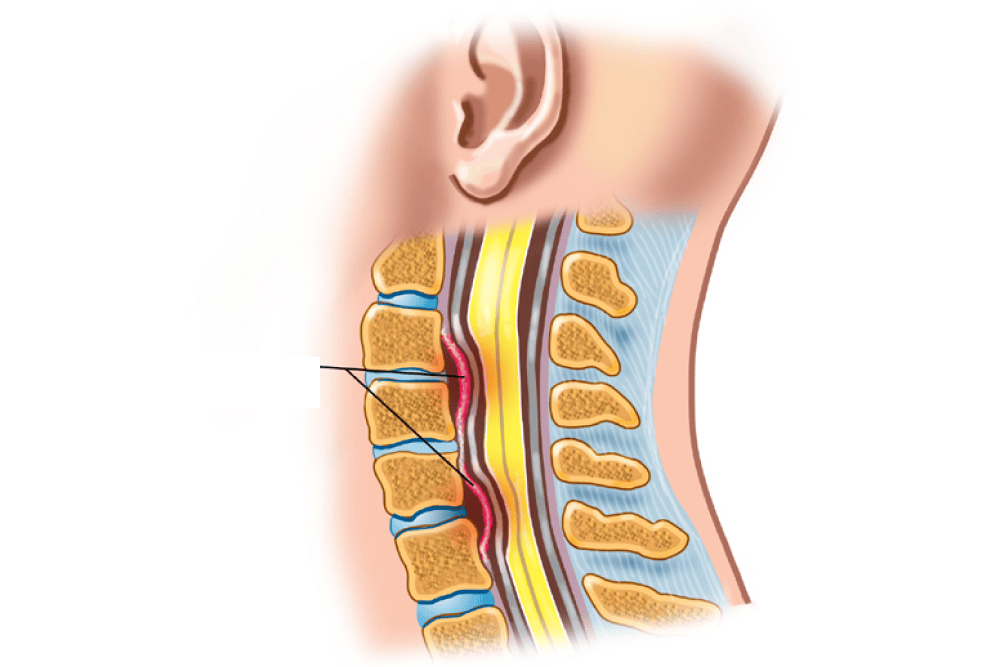
Ossified Posterior Longitudinal Ligament (OPLL) is a condition in which the posterior longitudinal ligament, a strong band of tissue that runs along the back of the vertebral bodies inside the spinal canal, gradually calcifies and hardens into bone. As this calcified mass enlarges, it encroaches on the spinal canal and compresses the spinal cord, leading to myelopathy.
OPLL predominantly affects the cervical spine and is more prevalent in Asian populations, including Indians, though it remains under-diagnosed. It is an important and distinct cause of cervical myelopathy that requires specific surgical planning.
Who Gets It and Why?
The exact cause is not fully understood, but recognised associations include:
- Genetic predisposition – a strong familial tendency, particularly in East and South Asian populations
- Metabolic factors – associations with diabetes, obesity, and diffuse idiopathic skeletal hyperostosis (DISH)
- Age – most commonly diagnosed in the fifth and sixth decades
What Does It Feel Like?
Symptoms mirror those of cervical myelopathy from other causes:
- Progressive hand clumsiness and difficulty with fine movements
- Unsteady walking and balance problems
- Arm and leg weakness
- Neck stiffness and pain
- Bladder dysfunction in advanced cases
- Symptoms may worsen acutely after even minor neck injury
Unlike spondylotic myelopathy, OPLL can cause sudden neurological deterioration after relatively minor trauma, which makes early identification and management particularly important.
How Is It Diagnosed?
- CT scan is the definitive investigation — it clearly shows the extent, morphology (segmental, continuous, mixed), and thickness of the ossified ligament
- MRI assesses the degree of cord compression and any cord signal changes
- Together, CT and MRI guide both the diagnosis and the choice of surgical approach
How Is It Treated?
Surgical decompression is the treatment for symptomatic OPLL with cord compression. The approach is carefully chosen based on the extent of OPLL, number of levels involved, cervical alignment, and cord signal on MRI:
- Anterior approach (corpectomy with fusion) – directly removes the ossified ligament; preferred for focal disease
- Posterior approach (laminoplasty or laminectomy with fusion) – indirectly decompresses the cord by expanding the spinal canal; preferred for multilevel disease with preserved lordosis
- In complex or extensive cases, staged anterior and posterior surgery may be required
OPLL surgery requires careful planning and intraoperative neurophysiological monitoring. With appropriate surgical management, the majority of patients experience stabilisation or improvement in neurological function.
If you have been told you have OPLL, or if you are experiencing progressive hand or walking problems, specialist evaluation is strongly advised to prevent irreversible spinal cord damage.
Self-Check at Home
The Progressive Hand Function Check: Perform the hand grip and release test described under cervical myelopathy — open and close your fist as fast as possible for 10 seconds. OPLL-related myelopathy typically affects hand function early. Fewer than 20 cycles, or a marked difference between hands, warrants evaluation.
The Lhermitte’s Sign Check: Slowly and gently bend your neck forward, tucking your chin toward your chest. If you experience an electric shock-like sensation or tingling that travels down your spine or into your limbs, this is Lhermitte’s sign — a reliable indicator of cervical spinal cord irritation or compression. Do this gently and do not force the movement.
The Spasticity Check:
- Do your legs feel stiff, heavy, or difficult to move freely, particularly when climbing stairs?
- Do you experience unexpected leg stiffness or involuntary jerking of the legs, particularly at night? Spasticity in the legs is a sign of upper motor neuron involvement from cord compression
Unsure about your symptoms? Our free Spine Self Check takes less than two minutes and gives you a clearer picture before your consultation.
Motion-Preserving Surgical Options
Cervical Laminoplasty for OPLL: Laminoplasty is an excellent motion-preserving option for multilevel OPLL, particularly when the ossified ligament does not exceed 60% of the canal diameter and cervical alignment is maintained. By expanding the posterior canal without directly tackling the ossified ligament anteriorly, laminoplasty safely decompresses the cord while preserving cervical movement.
For OPLL confined to one or two levels, anterior decompression with disc replacement may be considered in carefully selected patients, achieving direct removal of the compressive lesion while maintaining motion.
The choice between anterior and posterior approaches in OPLL is highly individualised and requires careful analysis of OPLL morphology, extent, canal compromise, and cervical alignment.
Understanding your symptoms is the first step. If something here sounds familiar, book a consultation with Dr. Namith Rangaswamy or call +91 91081 04114 to get a proper diagnosis.