
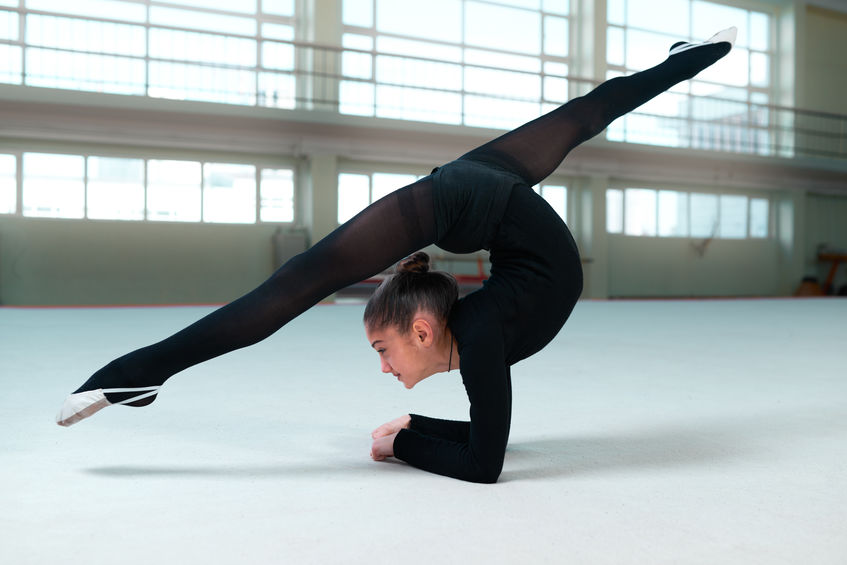
A mother brought her thirteen-year-old daughter to see me after a school health screening had flagged a spinal curve. The girl was otherwise completely healthy, active in classical dance, and entirely unaware that anything was different about her spine. The curve was 38 degrees on the Cobb angle measurement. She was still growing.
The mother had already done her research online. She had read about spinal fusion. She had watched videos of the procedure. She sat down in my clinic with two questions, both of which she asked before I had finished reviewing the X-rays. The first was whether surgery was necessary. The second, if it was, was whether her daughter would ever be able to dance again.
Both are exactly the right questions to ask, and the answer to the second one has changed considerably in the last decade.
What scoliosis is and when it needs treatment
Scoliosis is a sideways curve of the spine. Most cases in children and teenagers have no identifiable cause and are called adolescent idiopathic scoliosis. It affects approximately two to three percent of school-going children and has a strong female predominance, with the ratio of girls to boys rising as high as nine to one in curves above 40 degrees. PubMed Central
Most curves are small and require only monitoring. Bracing is used for moderate curves in growing children to try to prevent progression. Surgery enters the conversation when a curve is large enough and the child is still growing enough that it will continue to worsen without intervention. A curve approaching or above 45 to 50 degrees in a growing adolescent is the territory where surgical discussion begins.
What spinal fusion does, and what it costs
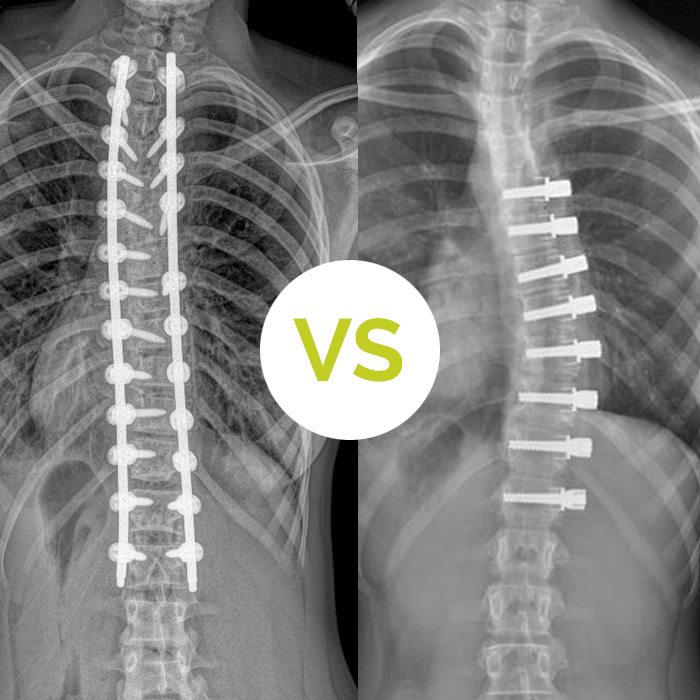
For decades, the surgical standard for significant scoliosis has been posterior spinal fusion. Rods and screws are attached to the vertebrae along the curve, the spine is pulled into a corrected position, and bone graft is placed so that the vertebrae gradually fuse together into a single solid structure. The correction it achieves is reliable and well-documented over many years.
But fusion is permanent. The segments that are fused together stop moving, stop growing, and stay that way for the rest of that child’s life. For a thirteen-year-old who dances, or plays cricket, or simply wants to move through adulthood with a flexible spine, the trade-off matters. Research has documented a net loss of spinal flexibility in patients who undergo fusion for scoliosis, with stiffness in the fused segments and no compensatory hypermobility in the unfused ones. Over decades, the segments above and below the fusion bear abnormal loads, which can accelerate degeneration at those levels. PubMed
None of this makes fusion wrong. For the right patient, it is excellent surgery. But for a growing child with a curve that might not need the most aggressive tool in the box, it prompted spine surgeons to ask whether there was another way.
What vertebral body tethering is
Vertebral body tethering, or VBT, is a fundamentally different approach to the same problem. Instead of fusing the spine into a fixed position, the surgeon attaches screws to the vertebrae on the outer side of the curve and connects them with a strong, flexible cord, the tether. The cord applies tension on one side of the spine, which gradually encourages the curve to straighten as the child continues to grow. The spine is not locked. It continues to move, and in growing patients, the vertebrae themselves are guided toward a more symmetrical shape through a process called growth modulation.
The surgery is done through small incisions on the side of the chest using a thoracoscopic approach. The muscles are not stripped from the spine the way they are in a posterior fusion. A meta-analysis of 17 comparative studies found that VBT patients had significantly shorter operation times, less blood loss, better outcomes in pain and function scores at two-year follow-up, greater lumbar flexibility, and superior shoulder balance compared to those who underwent spinal fusion. nih
What the honest trade-offs are
This is where I want to be direct, because VBT is not a simple upgrade over fusion. It is a different procedure with a different risk profile, and not every patient is a candidate.
The same meta-analysis found that VBT carries higher complication and revision rates than fusion. Tether breakage events are reported in 13 to 23% of cases across studies. Some patients require a second procedure, and a proportion eventually require conversion to fusion. The curve correction achieved by VBT is also somewhat less reliable than fusion, particularly in skeletally mature patients where there is less remaining growth to drive the modulation process. nihPubMed
The ideal candidate for VBT is a skeletally immature patient, meaning still significantly growing, with a curve in the range where fusion is being considered but not yet at the extreme end. The surgery requires a surgeon experienced specifically in this technique, and the follow-up commitment is significant because we are watching the curve respond and grow over years.
What happened to the thirteen-year-old dancer
She was a good candidate. Her growth plates showed she had meaningful growth remaining. Her curve was flexible on bending films. We discussed both options openly with her and her mother, including the revision rate, and they chose VBT.
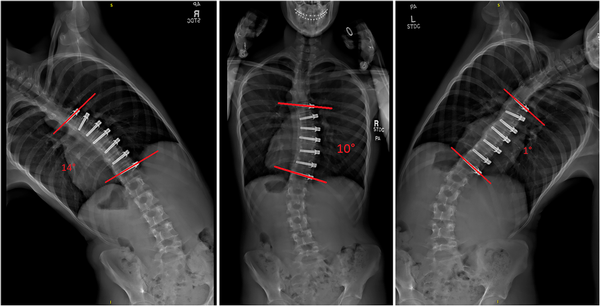
Two years on, her curve has corrected to 18 degrees. She dances. Her spine moves. She has not needed revision surgery.
I tell this story not to suggest VBT is always the answer, but to make the point that the answer is no longer simply “fusion or bracing.” For the right patient, at the right age, with the right curve, there is now a meaningful alternative that gives the spine a chance to straighten while keeping it alive and mobile.
If your child has been told they need scoliosis surgery, ask specifically whether they are a candidate for vertebral body tethering. It is a question worth asking while the window of growth is still open.
Dr. Namith Rangaswamy is an AIIMS-trained spine surgeon based in Bangalore. drnamithspine.com
If you’re weighing your surgical options, getting a clear, evidence-based opinion matters. Book an appointment with Dr. Namith Rangaswamy or call +91 91081 04114.